Catriona Lennox-Buchanan
Body-based work for chronic pain and post-burnout recovery
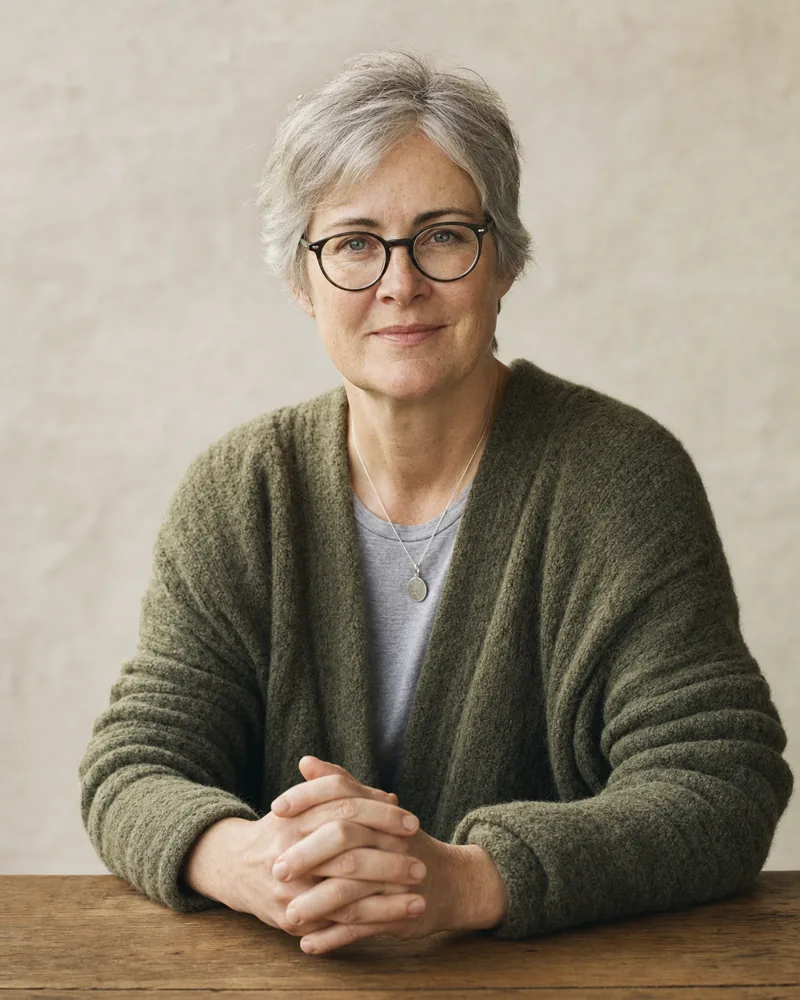
Catriona Lennox-Buchanan trained as a clinical psychologist in Edinburgh in the late 1990s, spent twenty years in NHS pain services in Glasgow and London, and re-trained as a somatic experiencing practitioner in 2018. She came into body-based therapy through the back door, having watched too many of her chronic pain patients get better only when the talking stopped.
The work
Her sessions are quiet and physical. Most of the work happens with the client lying clothed on a soft couch or sitting in a chair, breathing differently than they normally would, while Catriona offers gentle verbal prompts and occasional hands-on contact at the shoulder, wrist or feet. There is very little discussion of childhood.
Background and training
Catriona read medicine at Edinburgh before pivoting to clinical psychology after a year on the wards. She trained at the University of Glasgow, completed her doctorate in chronic pain pathways at the Royal Hospital for Sick Children, and held NHS posts in pain medicine for two decades. Her somatic experiencing training was completed under Steven Hoskinson; she is also trained in Sensorimotor Psychotherapy at Level Two.
What she works with
She works mostly with people whose system has been on emergency alert for a long time. That includes long-Covid, post-burnout, fibromyalgia, post-surgical recovery, and the kind of high-functioning adult who has not noticed they have been holding their breath since 2019.
In practice
She is not for everyone. Some people want to talk; she does not really do that.
She is for people who have already done the talking and find themselves still wound tight, or who have a body story that they cannot get into language. Her sessions are fifty minutes, weekly or fortnightly, usually for a six-month arc.
The body keeps better notes than the mind does. My job is to read them back.
Outside the practice
She volunteers monthly at a clinic for survivors of torture and trafficking, where she does pro bono body work. She also runs an annual two-day workshop for clinicians on the somatic basics of pain.
I have never met a patient who was not making sense. I have met many whose sense was being made in a register their doctor could not hear.